Bulls streetwear cloth

Emmanuel Udochukwu
August 27, 2026
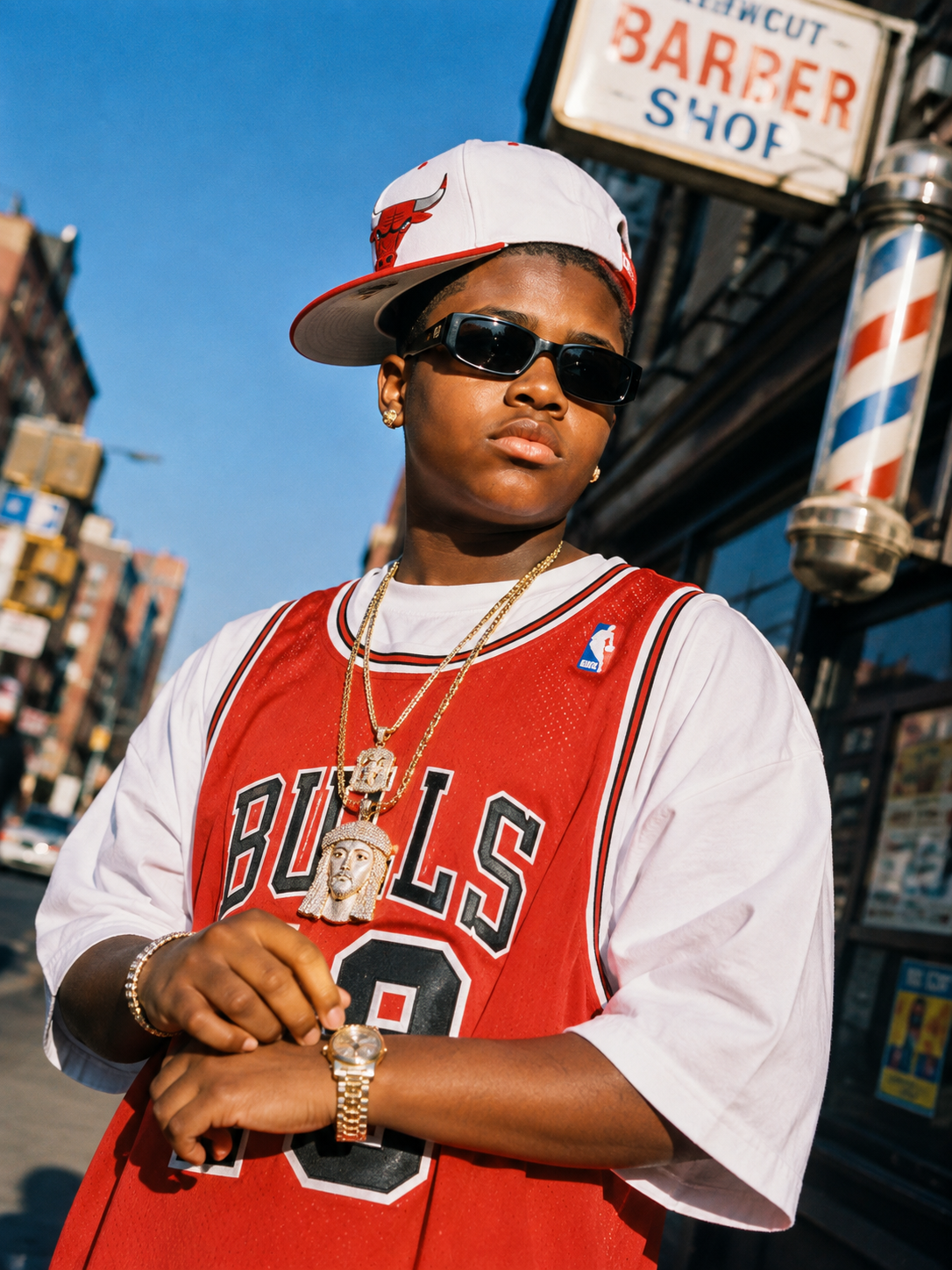
I recently used ChatGPT to generate an image from a detailed prompt, and the result surprised me. The prompt described a 2000s-inspired hip-hop portrait with streetwear clothing, gold jewelry, sunglasses, and a New York City background. ChatGPT took my uploaded photo and transformed it into a portrait that looked like it came from a fashion magazine in the early 2000s.
The image showed me wearing a red Chicago Bulls number 18 tank top over an oversized white T-shirt, a white-and-red Bulls cap tilted to the side, dark square sunglasses, gold earrings, and two shiny gold necklaces with large pendants. The background looked like a blurred New York barbershop under a bright blue sky, with vivid colors and strong contrast that matched the style of old hip-hop editorials.
This experience made me realize how powerful AI image generation has become. ChatGPT did not simply place my face onto another picture—it used my face as the reference while changing the clothing, accessories, hairstyle, pose, lighting, and environment. The final image still looked like me, but it looked like a completely different version of me in a different place and time.
It also taught me that prompts are very important. The more detailed the prompt is, the more accurate and realistic the generated image becomes. Every detail—from the clothes and jewelry to the location, lighting, colors, and facial expression—helped shape the final result.
Using ChatGPT for image creation showed me how AI can be used for creativity, fashion concepts, storytelling, profile pictures, posters, and digital art. At the same time, it reminded me that AI-generated images are edited creations, not real photographs, and they should be used responsibly.
The Original ChatGPT Prompt
Use 100% of the attached image to create a 2000s-style male portrait. A man with a serious expression wears a red Bulls number 18 tank top with black and white details, underneath an oversized white T-shirt. He wears a white and red Bulls cap, tilted slightly to the side, small gold earrings, and two gold necklaces with large, shiny pendants—one with a stylized face studded with stones. The man is wearing dark, square-shaped sunglasses, posing with his hands fiddling with his wrist or watch and looking directly to the side with a confident expression. The photo is taken outdoors, against a clear blue sky, in New York City, near a barbershop in the 2000s. The background is out of focus. The lighting is natural, highlighting skin tones and the shine of the accessories. The colors are vivid and saturated, predominantly blue, orange, and white, with high contrast creating a vibrant, urban feel typical of hip-hop and streetwear editorials from the 2000s.
What I Learned
ChatGPT can transform a real photo into a completely different artistic style.
Detailed prompts produce more realistic and accurate results.
AI can change clothing, background, accessories, lighting, and pose while keeping the person's facial identity recognizable.
AI image generation is a creative tool that should be used responsibly and not to mislead people with fake images.
The image showed me wearing a red Chicago Bulls number 18 tank top over an oversized white T-shirt, a white-and-red Bulls cap tilted to the side, dark square sunglasses, gold earrings, and two shiny gold necklaces with large pendants. The background looked like a blurred New York barbershop under a bright blue sky, with vivid colors and strong contrast that matched the style of old hip-hop editorials.
This experience made me realize how powerful AI image generation has become. ChatGPT did not simply place my face onto another picture—it used my face as the reference while changing the clothing, accessories, hairstyle, pose, lighting, and environment. The final image still looked like me, but it looked like a completely different version of me in a different place and time.
It also taught me that prompts are very important. The more detailed the prompt is, the more accurate and realistic the generated image becomes. Every detail—from the clothes and jewelry to the location, lighting, colors, and facial expression—helped shape the final result.
Using ChatGPT for image creation showed me how AI can be used for creativity, fashion concepts, storytelling, profile pictures, posters, and digital art. At the same time, it reminded me that AI-generated images are edited creations, not real photographs, and they should be used responsibly.
The Original ChatGPT Prompt
Use 100% of the attached image to create a 2000s-style male portrait. A man with a serious expression wears a red Bulls number 18 tank top with black and white details, underneath an oversized white T-shirt. He wears a white and red Bulls cap, tilted slightly to the side, small gold earrings, and two gold necklaces with large, shiny pendants—one with a stylized face studded with stones. The man is wearing dark, square-shaped sunglasses, posing with his hands fiddling with his wrist or watch and looking directly to the side with a confident expression. The photo is taken outdoors, against a clear blue sky, in New York City, near a barbershop in the 2000s. The background is out of focus. The lighting is natural, highlighting skin tones and the shine of the accessories. The colors are vivid and saturated, predominantly blue, orange, and white, with high contrast creating a vibrant, urban feel typical of hip-hop and streetwear editorials from the 2000s.
What I Learned
ChatGPT can transform a real photo into a completely different artistic style.
Detailed prompts produce more realistic and accurate results.
AI can change clothing, background, accessories, lighting, and pose while keeping the person's facial identity recognizable.
AI image generation is a creative tool that should be used responsibly and not to mislead people with fake images.