Al-Farabi: The Second Teacher After Aristotle
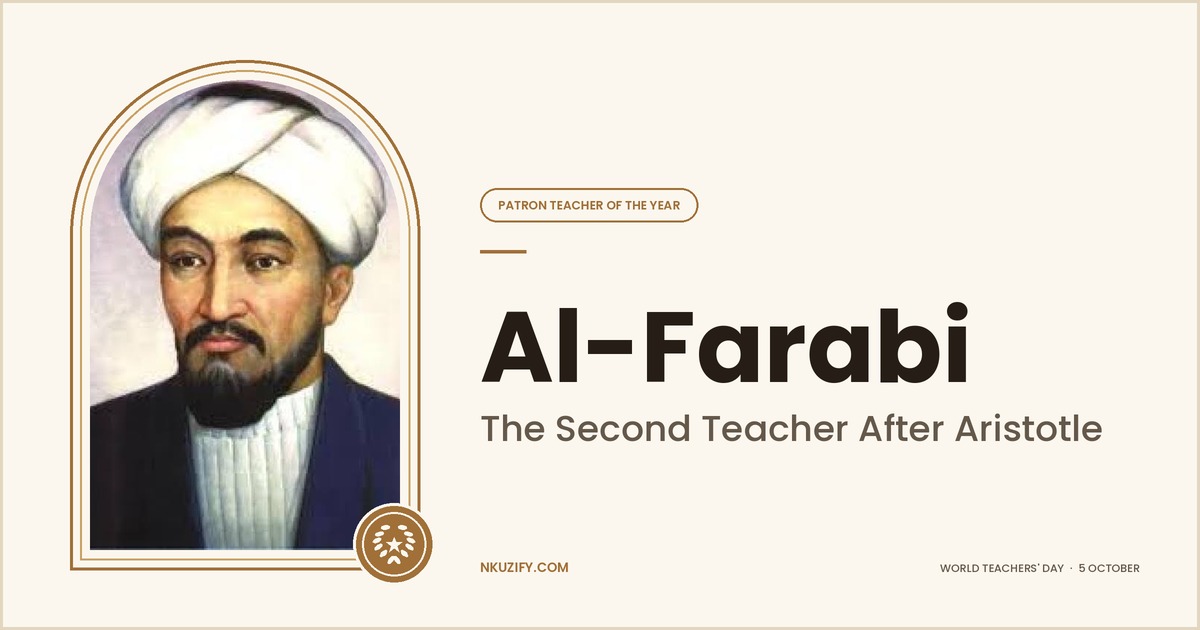
Recognised by Nkuzify as Patron Teacher of the Year.
One of the best compliments a teacher can get is being named right after Aristotle. In the Islamic world Aristotle was known as the First Teacher. The man known as the Second Teacher is Al-Farabi.
Who Was Al-Farabi?
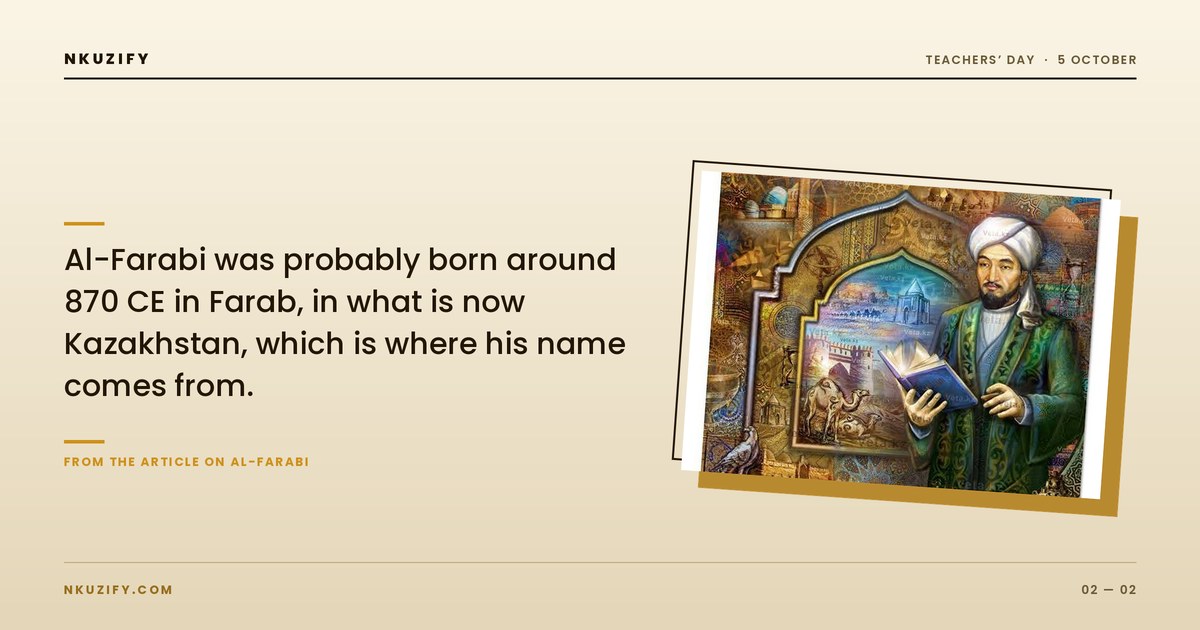
Al-Farabi was probably born around 870 CE in Farab, in what is now Kazakhstan, which is where his name comes from. According to the Stanford Encyclopedia of Philosophy, he moved to Baghdad as a young man, and he later went to Damascus, where he died at the end of 950 or the start of 951. Little reliable information about his life has survived, so even those dates come with a "probably".
Why They Called Him The Second Teacher
He explained difficult ideas clearly. He wrote commentaries on the works of Aristotle and Plato, which helped readers understand them, and that work earned him the title. He also wrote on logic, physics, metaphysics, music and politics. In one book he tried to show that Plato and Aristotle agreed on the big questions rather than clashing.
A Teacher Of Teachers
His work influenced later thinkers such as Ibn Sina, known in Europe as Avicenna, and Ibn Rushd, known as Averroes. Scholars also often credit him with founding political philosophy in the Islamic tradition. His book on the virtuous city, which he finished in Damascus, is about what a good community looks like and how it should be led.
The teacher behind the Second Teacher
He studied logic with a Christian cleric, Yuhanna ibn Haylan, whose own life was in the church. The man who would be called the Second Teacher first sat as a student, and his teacher belonged to a different faith. In Baghdad he also learned Arabic well enough to join the city's philosophical gatherings, and he spent most of his scholarly life there.
How he made logic teachable
He is credited with dividing logic into two groups, idea and proof, which gave students a simple map of the subject, and he also wrote about how logic relates to grammar. More than a hundred works are attributed to him, among them the Survey of the Sciences, which explains what each branch of knowledge studies and how the branches fit together. A teacher who writes that kind of book is trying to make a whole subject easy to enter.
The musician
He also wrote the Great Book of Music, and he is credited with the qanun, a stringed instrument still played today. A teacher who knows music as well as logic can show students that knowledge connects.
The court of Aleppo
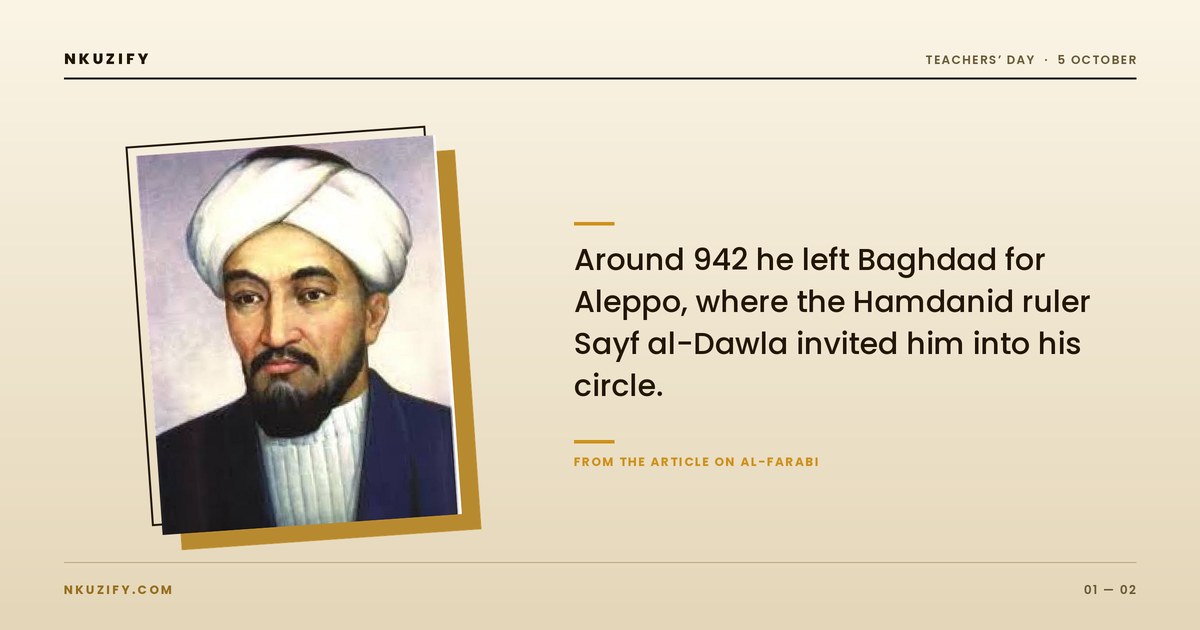
Around 942 he left Baghdad for Aleppo, where the Hamdanid ruler Sayf al-Dawla invited him into his circle. He later travelled to Egypt and returned to Syria under the same ruler's support.
Why Nkuzify Holds Him Up
A good teacher takes something hard and makes it clear for the next person. That is exactly what the Second Teacher did with the philosophy of his day. He did not only know things. He made them teachable, and that is why he is a patron of teaching.
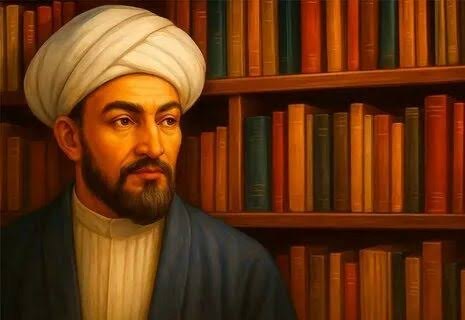
Nobody alive today knows exactly how Al-Farabi looked. The pictures on this page are illustrations.
Where this comes from: the Stanford Encyclopedia of Philosophy, The Great Thinkers and e-history.kz.
Meet The Other Patrons
Imhotep, Ptahhotep, Ahmed Baba of Timbuktu, Fatima al-Fihri. You can also go back to the full list: Global Patrons Of Teaching: Imhotep, Ahmed Baba, Fatima Al-Fihri And More.
Thank You
Happy Teachers' Day to Al-Farabi, and to every teacher who keeps this long line going, from all of us at Nkuzify.
Comments (0)