Funmilayo Ransome-Kuti: Teacher and Women's Rights Campaigner
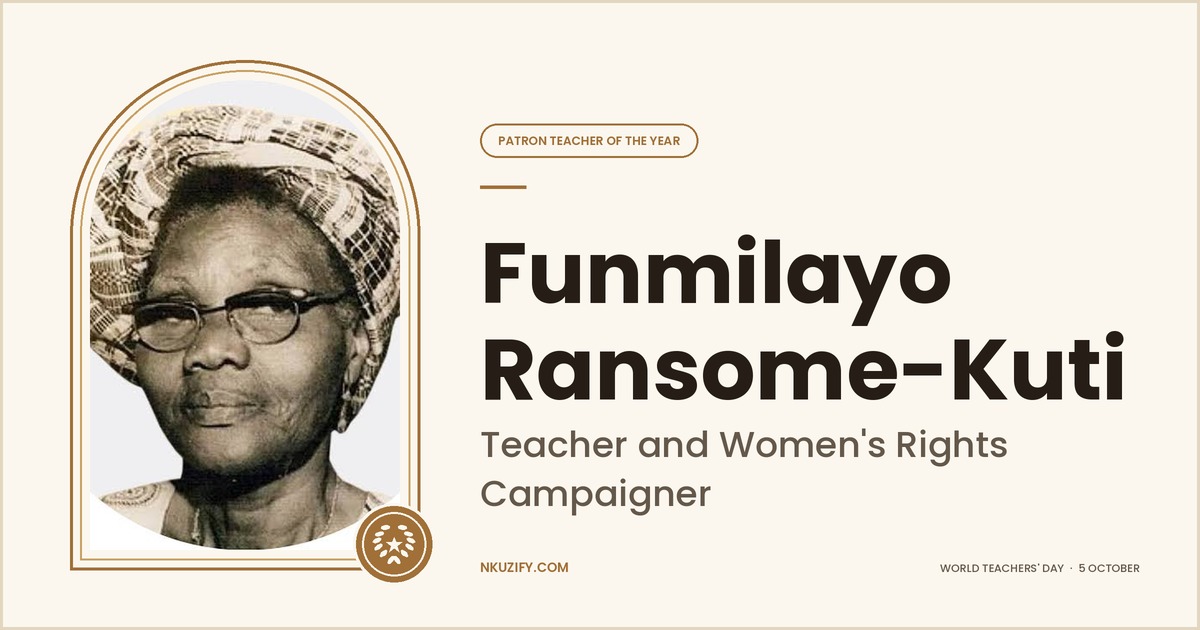
Recognised by Nkuzify as Patron Teacher of the Year.
World Teachers' Day
Happy Teachers' Day from all of us at Nkuzify.
The authorities in Abeokuta in the 1940s had a problem, and it was not an army. It was thousands of market women, led by a schoolteacher.
She had learned early that the way to change a town is to teach its people. First came the girls' classroom, then the literacy class for women who had never been taught to read, and only then the street.
She was Funmilayo Ransome-Kuti, and the whole town called her the Lioness of Lisabi.
A teacher with a longer lesson plan
She was born on 25 October 1900 in Abeokuta. After her studies in England she returned to Nigeria in 1922 and became a teacher, later teaching at the same grammar school where she had been the first girl. She organised literacy classes for women and started a nursery school in the 1930s.
The market women who could not read
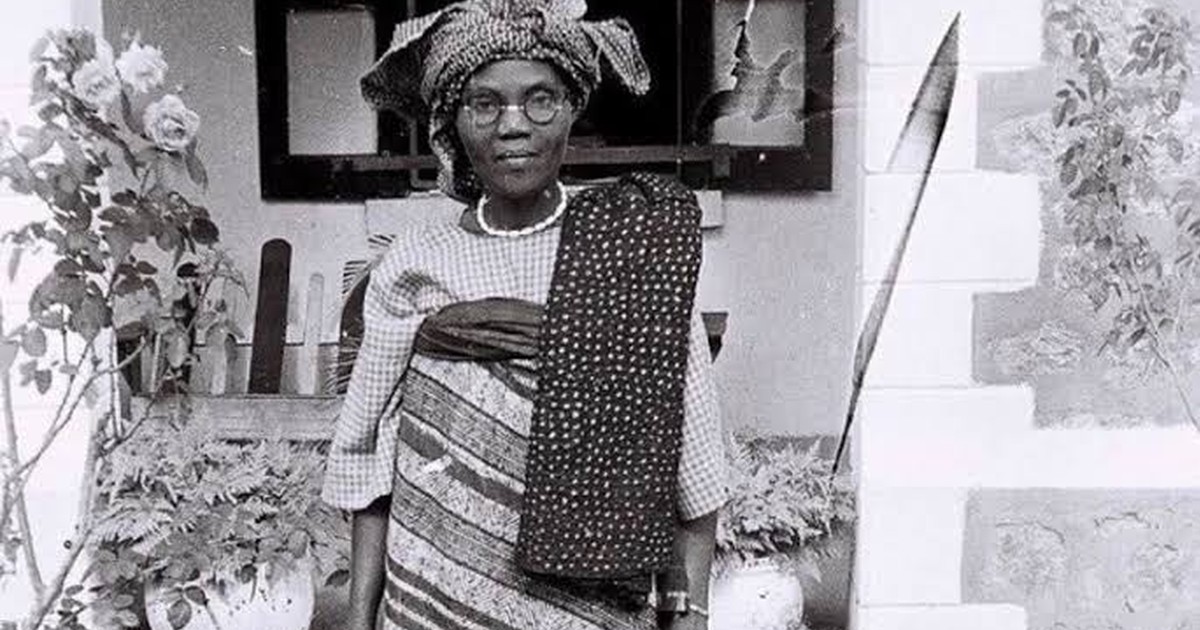
In 1932 she helped organise the Abeokuta Ladies Club, at first a small group of educated women doing charity and adult education. In 1946 it became the Abeokuta Women's Union and opened its doors to every woman in the town, including market women who could not read. At its height it was estimated to have up to 20,000 members.

Those women were being crushed by unfair taxes and price controls. They answered with a simple cry: no taxation without representation.
Jailed, and still teaching
She was jailed in 1947 for refusing to pay tax. The protests grew so strong that the Alake of Abeokuta stepped down for a time in 1949, and separate tax rates for women were abolished. People called her the Lioness of Lisabi.
The union grew into the Nigerian Women's Union in 1949 and the Federation of Nigerian Women's Societies in 1953. She lectured in several countries on the lives of Nigerian women, and she received the Lenin Peace Prize and the Order of the Niger.
The price of speaking out
She stayed outspoken after independence. In February 1978, soldiers raided the home of her son, Fela Anikulapo-Kuti, and she was thrown from a window. She died that year, on 13 April 1978.
Why Nkuzify celebrates her
Her story begins with a classroom and a literacy class for women who had never been taught to read. She understood that teaching is the first step to freedom. At Nkuzify, we believe education belongs to everyone, including those who were left out, and that one teacher can lead a whole community. She is one of the strongest proofs that this is true.
Read more in Nigeria's Education Heroes: Pioneers, Prizewinners and Unsung Teachers, or make a free Thank You card for your own teacher.
Comments (0)