Spirituality and Politics in Ọdịnani
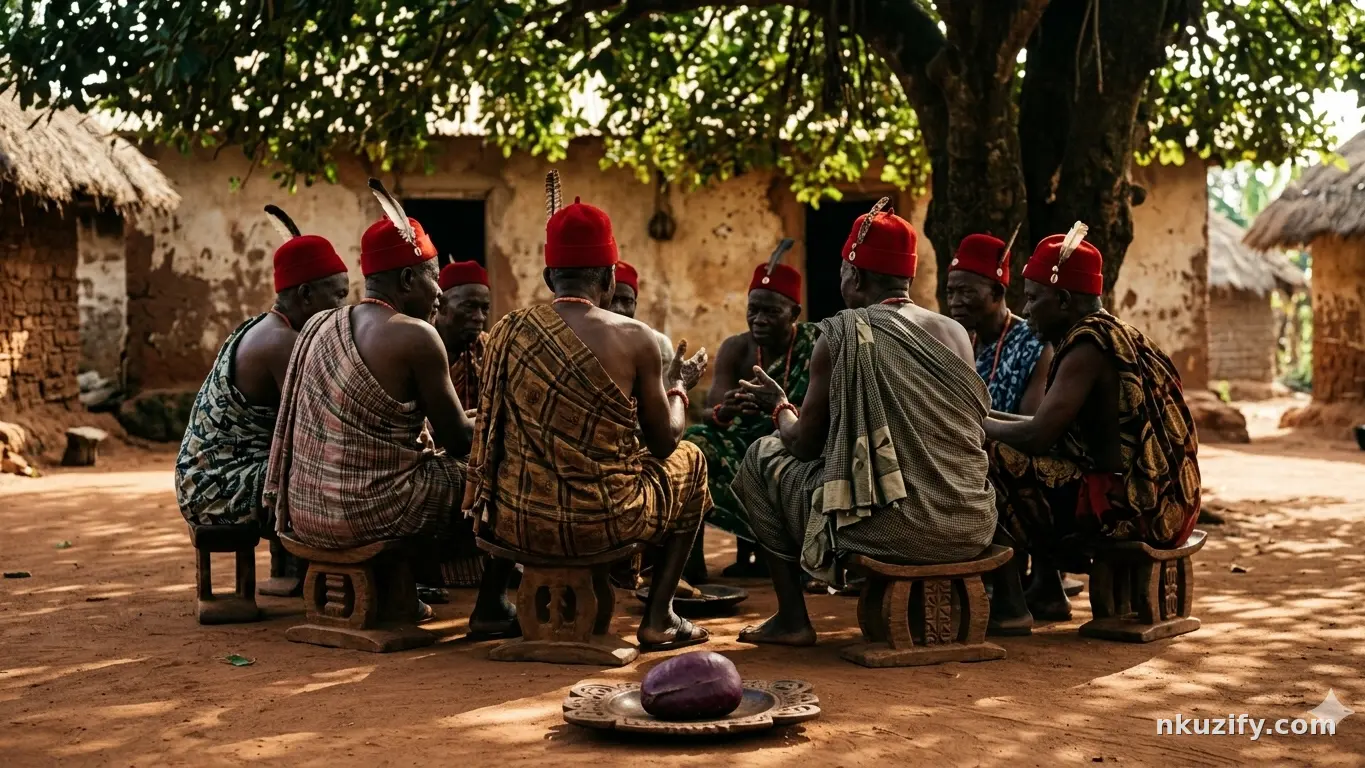
Spirituality has a political aspect. What people call “politics” today is often reduced to party rivalry, corruption, and power struggle. But in Ọdịnani na Omenani, politics is far older and deeper than party systems. It means the organization of life, authority, responsibility, and balance within a community.
From this lens, my observation is correct: the ancestors never separated spirituality from governance — they saw them as two arms of one body.
1. Anaigbo — Land as a Political-Spiritual Nation
Anaigbo is not just geography; it is a spiritual jurisdiction. Land (Ala) carries law, memory, taboo, and authority.
- Every clan was a political unit with boundaries, customs, and leadership structures.
- Spiritual forces governed morality, while human leaders administered daily affairs.
- Politics here means stewardship of collective destiny, not personal ambition.
The land itself legitimizes authority. Whoever leads without alignment to Ala loses legitimacy. In Ọdịnani, power is not self-created; it is granted by community and spirit.
2. Nri, Agbaja, Isu, Idu, Oru — Clan Systems as Political Architecture
Each clan embodied a different historical and ritual identity, showing that Igbo society recognized distributed governance rather than one centralized empire. Political sides include:
- Clan-based law and customs.
- Independent decision-making councils.
- Inter-clan negotiations and alliances.
- Ritual hierarchy that regulated social order.
This shows that spirituality shaped political identity, but did not erase diversity. Unity did not mean uniformity; politics was plural yet connected.
3. Agbalas and Sacred Jurisdiction
Agbalas (shrines or spiritual centers) were more than religious spaces:
- They served as judicial spaces where oaths were sworn.
- Community disputes were settled through sacred accountability.
- Fear of spiritual consequences upheld social contracts.
This made spirituality a check on political abuse. Modern terms would call this constitutional restraint.
4. Ndị Ichie — Spiritual & Political Eldership
Ndị Ichie were custodians of memory and social balance. Political roles:
- Conflict mediation.
- Policy guidance through wisdom, not force.
- Protection of communal ethics.
- Advisory role over younger leaders.
Their authority came from reputation and integrity, not wealth. Leadership was merit-based through character, age, and service.
5. Nze na Ọzọ — Moral Governance
The Nze and Ọzọ institution was both spiritual and political. Political functions:
- Symbolized ethical leadership.
- Represented communal law and diplomacy.
- Served as guardians of truth and oath.
- Acted as stabilizers during conflicts.
The title restrained selfish behavior because one carried sacred responsibility. The title was not power to dominate; it was a burden to uphold balance.
6. Umunna — Political Strategy Council
Umunna represents perhaps the clearest political institution in Igbo society. Roles include:
- Decision-making through consensus.
- Land sharing and inheritance regulation.
- Conflict resolution.
- Collective security and economic planning.
Meetings at Obu Ndị Ichie functioned like parliamentary assemblies. No voice was absolute; debate produced wisdom.
7. Ụmụ Ada — Feminine Political Authority
Ụmụ Ada were not peripheral; they were moral regulators. Political influence:
- Intervention in family disputes.
- Protection of women and children.
- Social sanctions against injustice.
- Ability to enforce communal shame when men failed morally.
This balanced masculine authority with feminine moral force. Power in Ọdịnani is dual — masculine and feminine currents maintain equilibrium.
8. Nna and Di Okpara — Household Governance
Politics begins at the smallest unit: the family.
- Nna: steward of lineage continuity.
- Di Okpara: administrative head of extended family.
- Responsibilities include resource allocation, conflict resolution, and ritual leadership.
This mirrors wider governance: family → kindred → village → clan.
9. Ọfọ — Symbol of Legitimate Authority
Ọfọ is more than a staff. Political meaning:
- Represents truth and justice.
- Legitimizes decisions made openly and ethically.
- Connects leadership to ancestors.
Without Ọfọ, authority lacks spiritual grounding. This prevented tyranny — leaders ruled under ancestral witness.
10. Akajiofo — Executing Authority
Akajiofo represents delegated authority. Political side:
- Enforcement of collective decisions.
- Maintenance of order.
- Execution of communal justice.
This shows separation between those who deliberate (elders) and those who execute decisions — a sophisticated governance model.
11. Dibia — Influence and Advisory Power
A Dibia is not merely a healer; they are interpreters of unseen dynamics affecting society. Political roles:
- Guidance during crises.
- Divination before major communal decisions.
- Warning against imbalance or spiritual consequences.
This is similar to strategic advisors or consultants in modern systems. A Dibia’s power comes from influence, chi na Agwụ ya, not domination.
12. Eke, Oye, Afor, Nkwọ — Market Days as Civic Order
The market week structured social and economic rhythm. Political dimensions:
- Economic regulation and trade cycles.
- Scheduling of meetings and rituals.
- Conflict-free exchange zones.
- Inter-community diplomacy.
Time itself was politicized — order created stability.
Is Politics “Dirty” in Ọdịnani?
The answer is nuanced.
- Politics as selfish struggle → misaligned power (what many fear today).
- Politics as stewardship of community harmony → sacred responsibility.
Our ancestors did not avoid politics; they sacralized it. What they warned against was:
- Personal ambition without community mandate.
- Power disconnected from morality.
- Leadership without accountability to Ala and ancestors.
An Onye Nkuzi (teacher) cannot be completely detached from politics because teaching itself shapes society. The question is not whether to engage, but how:
- Speak truth, not propaganda.
- Guide principles, not factions.
- Protect community ethics rather than personal gain.
- Remain aligned with Ọfọ — truth and balance.
One can stand near politics without being swallowed by it.
In Ọdịnani:
Spirit gives vision.
Community gives authority.
Politics gives structure.
Morality keeps power clean.
So the teaching is this: Politics is not dirty — human imbalance makes it dirty. When guided by Ọfọ, elders, and communal accountability, politics becomes an extension of spiritual responsibility.
As onye vu Agwụ Okala I must always stand by truth regarding politics.
Ezeakonobi Arọh
Ọdịnani Library
Written 17 February 2026
Comments (0)